
Hello

www.kolkatataxconsultants.in

Recent Posts

Pages: [1] 2
1
Blog / UNION BUDGET 2026
« Last post by D. Saha & Co. on February 03, 2026, 11:04:27 am »
HIGHLIGHTS OF UNION BUDGET 2026 RELATED TO NRIs & PROIs
-   By Team of D. Saha & Co.

Simplifying NRI Property Deals: PAN Replaces TAN

•   The Union Budget 2026 27 proposes a change to simplify property transactions when buying from Non Resident Indians (NRIs).
• From 1 October 2026, resident individuals and Hindu Undivided Families (HUFs) buying immovable property from an NRI will no longer need a TAN (Tax Deduction and Collection Account Number) for deducting tax at source (TDS).
• Instead, buyers can use their PAN (Permanent Account Number) to report and deposit TDS, just as in regular property purchases between Indian residents.
• This move is expected to ease compliance and reduce the administrative burden for buyers in NRI property deals.


Lower TCS Eases Overseas Education and Medical Payments

•   The Union Budget 2026 27, presented by the Finance Minister, proposes reducing the Tax Collected at Source (TCS) on certain foreign remittances to ease upfront tax outgo.
• Under the Liberalised Remittance Scheme (LRS), the TCS rate for self funded education and medical expenses abroad is being lowered from 5% to 2%.
• The Budget also cuts TCS on overseas tour packages to a flat 2%, replacing the previous structure of 5% for amounts up to ₹10 lakh and 20% beyond that.
• These changes are intended to reduce the upfront cash burden for families funding education, healthcare, or travel abroad, and are expected to boost outbound tourism and ease foreign spending.
• However, the TCS rate of 20% still continues for other types of foreign remittances not covered by these categories.


Budget 2026 Offers Relief on Undisclosed Foreign Holdings

•   The Union Budget 2026–27 introduces a new amnesty scheme called the Foreign Assets of Small Taxpayers – Disclosure Scheme, 2026 (FAST DS 2026) to help taxpayers who unintentionally failed to disclose their overseas income or assets.
• Under this scheme, resident taxpayers get a limited, time bound window to declare undisclosed foreign income and assets and avoid harsh penalties or prosecution under the Black Money (Undisclosed Foreign Income and Assets) and Imposition of Tax Act, 2015.
• Category A taxpayers (those who never disclosed overseas income/assets) with total undisclosed value up to ₹1 crore can regularise by paying 30% tax + 30% levy in lieu of penalty, and in return get immunity from prosecution.
• Category B taxpayers (who disclosed income or paid due tax but omitted to declare the asset) can get immunity from penalty and prosecution by paying a flat fee of ₹1 lakh, provided the asset value doesn’t exceed ₹5 crore.
• The government has also eased prosecution norms under the Black Money law for minor non disclosures: individuals with foreign assets (other than immovable property) worth up to ₹20 lakh will no longer face criminal action, retrospectively from 1 October 2024.


PROIs will henceforth have a wider room for investment

• Person Resident Outside India (PROIs) as per FEMA will be able to invest more in India on an individual basis from 5% to 10% and from 10% to 24% in equity instruments of listed Indian companies through NRE PIS Demat A/c with designated banks instead of FDI or FPI in any Indian company subject to Sectoral Caps or Investment Limits as per FEMA.


Disclaimer:- (You are advised to consult your Legal Counsel before taking any decisions. This is issued only for the purpose of public awareness and information. The Contributor or any of his employees/associates will not take any responsibility for any actions of the reader based directly or indirectly on the basis of the above Article.)

Please share your valuable suggestions/opinions/feedback.
2
Blog / Income Tax Bill 2025 - Taxpayers Delight !!
« Last post by D. Saha & Co. on March 06, 2025, 05:21:33 pm »
Income Tax Bill 2025 : Taxpayers Delight !!
-   Part Two.

# The new Bill shows a notable reduction in textual volume when juxtaposed with the existing Income Tax Act, as delineated below:

   •   Income-tax Act, 1961
       > Chapters: 47
       > Sections: 819*
       > Words: 5.12 lakhs

   •   The Proposed Act
       > Chapters: 47
       > Sections: 536
       > Words: 2.60 lakhs

* Note: This figure pertains to effective sections.

 Additionally, approximately 1,200 Provisos and 900 Explanations have been excised.

# A 'tax year' refers to a twelve-month period encompassed within a financial year. It supersedes the term 'previous year' as utilized in the Income-tax Act, 1961. Furthermore, with the cessation of the term 'assessment year' in the proposed Income-tax Bill, the term 'tax year' will now be consistently employed in connection with the applicable income tax rates. Additionally, assessments related to income or total income will be conducted for a "tax year."

# The proposed Bill introduces no alterations regarding the incidence of taxation or the methodology pertaining to the clubbing of income.

# The language within the provisions has been simplified, and redundant clauses have been eliminated. Additionally, clarity has been enhanced wherever feasible, and a formula has been introduced to facilitate understanding and certainty in computation.

# The Bill serves to elucidate India's position concerning the interpretation of terms within tax treaties. Proposed Section 159(7) stipulates the following:

   •   In circumstances where a term is defined in both the agreement and the Bill, the definition contained in the agreement shall take precedence.

   •   If a term is included in the agreement but is not defined within it, yet is defined in the Bill, the definition provided in the Bill, or any clarification issued by the Central Government, shall be adopted, effective from the date of the agreement.

   •   In the event that a term is present in the agreement but is not defined within either the agreement itself or the accompanying Bill, its interpretation shall be consistent with any notification issued by the Central Government. Such interpretation shall take effect from the date of the agreement.

   •   In scenarios where a term appears in the agreement but lacks a definition in the agreement, the Bill, or any notification, it shall be construed according to any applicable Act of the Central Government pertaining to taxation, or in the absence thereof, according to any other relevant law of the Central Government, with such interpretation applicable from the date of the agreement.

# This clarified framework is intended to reduce the likelihood of litigation and to improve the clarity surrounding the interpretation of terms within the context of tax treaties. It embodies India's current stance on tax treaties and is in accordance with international practices in this domain.

# There have been no significant changes to the tonnage tax scheme; however, the sections have been rearranged and reorganized to enhance clarity and readability. Furthermore, the modifications introduced in Budget 2025 have been appropriately integrated.

# All rights and obligations of taxpayers shall be preserved, guaranteeing that taxpayers receive their entitled refunds in accordance with the relevant regulations.

# Chapter XV of the Bill is structured into two distinct components: Part A, which addresses the Permanent Account Number (PAN), and Part B, which pertains to the submission of income tax returns. Proposed Section 263(1)(a) delineates the various categories of assessees required to file income tax returns. These assessees, as identified under Section 139 of the Income Tax Act of 1961, are categorized into several sub-sections. The proposed Income Tax Bill aims to amalgamate all categories of assessees into a single section, thereby streamlining the process for each category to identify and fulfill their obligations related to return filing.

# Exempt entities remain beneath responsibility to record go back of earnings if their general earnings earlier than allowing exemption exceeds the maximum quantity not chargeable to earnings tax.

# The deadlines for submitting income tax returns for each category of taxpayers remain consistent. These are now provided in a tabular format to enhance clarity and comprehension.

Disclaimer:- (You are advised to consult your Legal Counsel before taking any decisions. This is issued only for the purpose of public awareness and information. The Contributor or any of his employees/associates will not take any responsibility for any actions of the reader based directly or indirectly on the basis of the above Article.)

Please share your valuable suggestions/opinions/feedback.
Our e-mail id : info@kolkatataxconsultants.in
Contact nos. : 8420159817 / 9674797985
3
Blog / Simplified Tax Filing: How the Income Tax Bill 2025 Benefits Taxpayers
« Last post by D. Saha & Co. on February 27, 2025, 06:09:03 pm »
Simplified Tax Filing: How the Income Tax Bill 2025 Benefits Taxpayers
-   Part One.


The proposed Income Tax Bill, 2025, seeks to streamline the income tax return (ITR) filing process, making it more structured and user-friendly for taxpayers. The key changes aim to provide better clarity and accessibility around filing obligations, exempt entity requirements, and return deadlines. Here's a closer look at how the new framework will impact taxpayers:


Consolidated Filing Requirements:

Currently, taxpayers required to file returns are listed across multiple sections, creating compliance challenges. The new Bill consolidates all such categories under a single section, making it easier for taxpayers to identify their filing obligations.

Continued Transparency for Exempt Entities:

Even if an entity qualifies for tax exemption, it must still file an income tax return if its total income (before exemptions) exceeds the basic exemption limit. This rule remains unchanged to maintain tax transparency.

Organized Due Dates:

The filing deadlines for different categories of taxpayers remain the same, but are now presented in a clear, tabular format. This improved readability and reference reduces confusion during the compliance process.

Consistent Compliance Procedures:

The rules governing belated returns, revised returns, and updated returns remain unchanged, ensuring continuity in tax compliance procedures.

In summary, the Income Tax Bill, 2025, aims to simplify tax compliance without altering core provisions. Taxpayers can expect greater clarity, reduced complexity, and enhanced ease of filing while fulfilling their tax obligations.


Disclaimer:- (You are advised to consult your Legal Counsel before taking any decisions. This is issued only for the purpose of public awareness and information. The Contributor or any of his employees/associates will not take any responsibility for any actions of the reader based directly or indirectly on the basis of the above Article.)

Please share your valuable suggestions/opinions/feedback.
Our e-mail id : info@kolkatataxconsultants.in
Contact nos. : 8420159817 / 9674797985

4
Blog / UNION BUDGET 2025
« Last post by D. Saha & Co. on February 10, 2025, 05:49:09 pm »
SALIENT FEATURES OF UNION BUDGET 2025


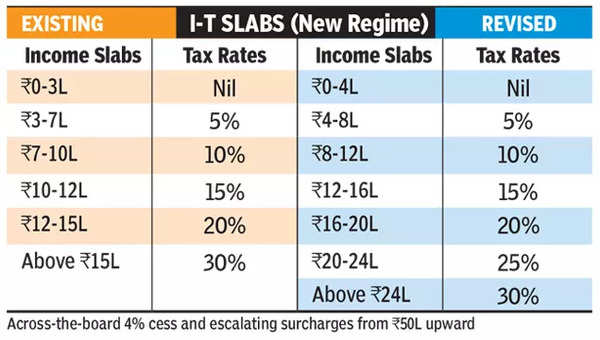
    • No tax on income up to Rs. 12L, With standard deduction, salaried remain tax free up to Rs. 12.75L. Rebate of Rs.60k and tax slab rejig will result in savings up to Rs.1.1L.


    • Updated Returns can be filed upto 48 months from end of assessment year. Rate of additional Income Tax payable for updated return filed after expiry of 24 months and up to 36 months – 60% of aggregate of tax and interest payable; 70% and interest payable after expiry of 36 months and up to 48 months.

   • No deemed rent for 2 self-occupied house properties

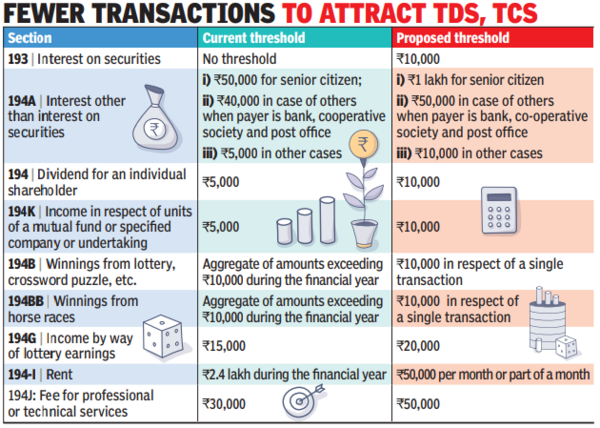
   • TDS on house rent to apply only beyond Rs.6L a year against earlier Rs. 2.4L

   • For senior citizens, withdrawals from national small savings (NSS) accounts post Aug 29, 2024 to be tax exempt

   • Payment to NPS Vatsalya eligible for deduction of Rs.50k, akin to NPS for the old regime.

   • Income Tax Rebate of Rs. 60000 under new regime but non-applicable on income  taxed at special rates (only for residents)

   • Validity of registration of a Charitable Trust has been extended from the current 5 years to 10 years for smaller trusts with income below Rs. 5 crore.

   • Exemption limit on gain from redemption of Listed Shares increased to Rs. 1.25L

   • Income earned from redemption of ULIP being non-exempted will be qualified as capital gains.

   • TDS for senior citizens on bank interest only above Rs. 1L. For others, threshold increased to Rs.50k. TDS on dividend income above Rs. 10k.

   • Threshold for TCS on overseas remittances under the Liberalized Remittance Scheme (LRS) raised to Rs. 10L with education from loan out of bracket


Disclaimer:- (You are advised to consult your Legal Counsel before taking any decisions. This is issued only for the purpose of public awareness and information. The Contributor or any of his employees/associates will not take any responsibility for any actions of the reader based directly or indirectly on the basis of the above Article.)

Please share your valuable suggestions/opinions/feedback.
5
Blog / INCOME TAX CLEARANCE CERTIFICATE
« Last post by D. Saha & Co. on August 23, 2024, 05:35:57 pm »
ALL ABOUT NEW INCOME TAX CLEARANCE CERTIFICATE RULES AS PER ‘THE FINANCE (NO.2)ACT,2024’:


New government laws need a tax clearance certificate from October 1, 2024. Understand the ramifications of the harsher exit norms, including amendments to the Black Money Act. Ensure a hassle-free travel by remaining informed. Starting from 1 October 2024, the Government of India has introduced new regulations requiring all Indian citizens to obtain a Tax Clearance Certificate (TCC) before leaving the country. This measure aims to ensure compliance with tax obligations and prevent tax evasion.

What is Income Tax Clearance Certificate?

The Income Tax Clearance Certificate serves as a proof that an individual has fully discharged tax obligations and there is no tax arrears pending against his or her PAN.

Clarifying media reports, the CBDT release has said that “it is being erroneously reported that all Indian citizens must obtain income-tax clearance certificate (ITCC) before leaving the country – a position that is factually incorrect.”

The CBDT has said that there was a misinterpretation of Section 230 (1A) of the Income-tax Act, 1961. “The Finance (No.2) Act, 2024 has made only an amendment in Section 230(1A) of the Act, vide which, reference of the Black Money (Undisclosed Foreign Income and Assets) and Imposition of Tax Act, 2015 (the ‘Black Money Act’) has been inserted in the said Section.”

This insertion has been made to also cover the liabilities under the Black Money Act in the same manner as the liabilities under the Income-tax Act, 1961 and other Acts dealing with direct taxes for the purpose of Section 230(1A) of the Income-tax Act, 1961, the release said.

As per the Income Tax Act, not all citizens planning to travel abroad need to obtain a tax clearance certificate. Only certain individuals, in respect of whom circumstances exist which make it necessary to obtain a tax clearance certificate, are required to obtain the said certificate.

Tax Clearance Certificate for Foreign Travel ‘Not for All’: CBDT

The Income Tax Department has come out with a clarification in response to news reports incorrectly interpreting Income Tax Clearance Certificate rules. The Central Board of Direct Taxes (CBDT) has explained under what circumstances Indian citizens will be required to obtain an Income Tax Clearance Certificate (ITCC) before travelling abroad.

There were media reports suggesting that ITCC would be mandatory to obtain if an Indian citizen is travelling abroad, prompting the tax department to issue a clarification in this regard.

ITCC is required to be obtained by certain individuals under following conditions:

•   Where the person is involved in serious financial irregularities and his presence is necessary in investigation of cases under the Income-Tax Act or the Wealth-Tax Act and it is likely that a tax demand will be raised against him.

•   Where the person has direct tax arrears exceeding Rs 10 lakh outstanding against him which have not been stayed by any authority.

Further, a person can be asked to obtain a tax clearance certificate only after recording the reasons for the same and after taking approval from the Principal Chief Commissioner of Income-Tax or Chief Commissioner of Income-Tax.


Disclaimer :- (You are advised to consult your Legal Counsel before taking any decisions. This is issued only for the purpose of public awareness and information. The Contributor or any of his employees/associates will not take any responsibility for any actions of the reader based directly or indirectly on the basis of the above Article.)


Please share your valuable suggestions/opinions/feedback.
Our e-mail id : info@kolkatataxconsultants.in
Contact nos. : 8420159817 / 9674797985

6
Blog / SNIPPETS OF INTERIM UNION BUDGET 2024 & WEST BENGAL BUDGET 2024
« Last post by D. Saha & Co. on February 13, 2024, 05:28:43 pm »
TCS on foreign tours up

• TCS raised to 20% from 5% for overseas tour package
• Impact on expenditure above Rs. 7 lakh
• Interim budget aligns change with IT circular of June 30, 2023
• TCS levy is required on all remittances made and not just remittance made out of India, for example, grant of Rupee gifts or Loan to NRI/PIO relatives for use in India.
• Education & Medical are kept out of ambit.

Waiver of Arrear Tax Demand

The Budget has proposed to withdraw all direct tax demands up to Rs.25,000 till the year 2009-10 and up to Rs.10,000 for the years 2010-11 to 2014-15.

The move is expected to benefit an estimated 1 crore taxpayers, who are still disputing these tax demands. It will not only free them from the tussle with the taxman, but also pave the way for tax refunds that were held up due to pending tax demands.

Stamp Duty on Gift to Relatives

Stamp Duty on Gift Deed slashed to maximum Rs. 1000/- only irrespective of Area Valuation from 0.5% in West Bengal Budget, 2024 in case of Gifts within family.


Best Regards
Team of D. Saha & Co.


Disclaimer :- (You are advised to consult your Legal Counsel before taking any decisions. This is issued only for the purpose of public awareness and information. The Contributor or any of his employees/associates will not take any responsibility for any actions of the reader based directly or indirectly on the basis of the above Article.)


Please share your valuable suggestions/opinions/feedback.
Our e-mail id : info@kolkatataxconsultants.in
Contact nos. : 8420159817 / 9674797985
7
Blog / BEWARE OF FRAUDS / MISSELLING BEFORE BUYING YOUR DREAM HOME!!
« Last post by D. Saha & Co. on December 20, 2023, 05:26:09 pm »
We all aspire to buy our Dream Home at some point of time in our lives but one must ensure to weed out the Legal and other irregularities before zooming in on a particular House Property. The following checks will be more than helpful:-

1.   Title Search Report with Non- Encumbrance Certificate:  To verify the flow of ownership of the said property from Jurisdictional Registry Offices with proper certificate to avoid Title Defect as per Transfer of Property Act.

2.   Money Suit Report : To Ensure the property has no financial suits in Jurisdictional court or courts.

3.   Criminal Report: To Ensure that the existing owner or owners has no criminal records in Jurisdictional court or courts related to the said property or others.

4.   Property Based Report: To ensure that the said property is not mortgaged/charged with any Financial Institute.

5.   Owner Based Search Report:  One should additionally conduct owner based Search too, to look into any lien/ mortgage which relates to the designated property.

6.    Authenticity of Sanctioned Plan: Ensure the Authenticity of the Building Plan (Kolkata)

7.   E-Assessment: Ensure the Stamp Valuation of the said property so that Over Valuation may be avoided.

8.   Caveat Emptor: To mitigate the risks of Multiple Buyer Agreements fraudulently conducted by the owner/owners.

9.   Agreement Verification: To read through the Fineprints of Clauses involved in the Agreement for Sale by Legal professional.

10.   Payment of TDS: To avoid Litigation related Income Tax Act. towards payment of TDS where the property value is more than 50 Lakhs only.

11.   ROC Search: This is essential in case of direct purchase from a Developer Firm.

The above is not a comprehensive but an indicative list of advice which will be insightful for you in your decision making process towards achieving a lifetime goal of buying your Dream Home.


Disclaimer :- (You are advised to consult your Legal Counsel before taking any decisions. This is issued only for the purpose of public awareness and information. The Contributor or any of his employees/associates will not take any responsibility for any actions of the reader based directly or indirectly on the basis of the above Article.)


Please share your valuable suggestions/opinions/feedback.
Our e-mail id : info@kolkatataxconsultants.in
Contact nos. : 8420159817 / 9674797985

8
Blog / FILE REVISED INCOME TAX RETURN FOR FINANCIAL YEAR - 2022-23
« Last post by D. Saha & Co. on November 02, 2023, 11:58:23 am »
FILE REVISED INCOME TAX RETURN FOR FINANCIAL YEAR - 2022-23, In The Following Cases :
-   By Team of D. Saha & Co.


Revised Income Tax Returns for the Assessment Year 2023-24 can be filed till 31 December 2023. The revision can be done even after the return has been processed by the tax department. If you made a mistake in your tax return, you can rectify it by filing a revised return. Find out why, when and how to do it.

Case 1 : Shivangi Saha, Kolkata-based graphic designer’s monthly income had increased 40% to nearly Rs.75,000, yet the tax remained zero. Her new employer neither deducted any tax nor asked her to show tax-saving investments proof. The good times didn’t last, though. Saha’s delight changed to dismay when she sat down to file her tax return last month. Her new employer had missed her previous job income and, therefore, did not deduct any tax. With no tax saving investments to show, except the mandatory Provident Fund contribution, she was saddled with a heavy tax liability.

There is a sliver of hope for taxpayers like Saha. Under Section 139(5) of the Income Tax Act 1961, she can file a revised tax return and opt for the new tax regime. Revised returns for the current assessment year can be filed till 31 December 2023. The revision can be done even after the return has been processed by the tax department. Under the new tax regime for the financial year 2022-23, Saha will not get the benefit of Rs.50,000 standard deduction or her contribution to the Provident Fund, but her tax would be lesser due to the lower tax rates resulting to savings of about Rs.3,200 tax under the new regime.
 
Case 2 : Pune-based Software Engineer Surajit Bose, who filed his ITR in July, have duly included the income from interest and dividends as per Form 26AS, but did not mention the capital gains of Rs.2.25 lakh from stocks and equity funds reflected in Annual Information Statement (AIS), which he subsequently noticed.

Bose can expect a notice with penalty from the tax department for the omission when his return is processed. The department has information on all financial transactions conducted by the individual during the year. Banks and NBFCs report all interest paid on deposits and savings accounts, brokerages and mutual funds report capital gains and dividends, credit card issuers report high-value transactions, tenants report payment of rent and forex dealers report purchase of foreign currency. This puts taxpayers like Bose on a sticky wicket. This is why it is recommended that taxpayers should reconcile the information in the AIS while filing their tax returns.

At the same time, taxpayers should not blindly follow the AIS. It takes time for details to get updated in the AIS. Even then, some types of income may not get captured in the form. For instance, the interest on small savings schemes won’t be mentioned in the AIS. Revised returns can be filed even by taxpayers who filed belated returns after the 31 July dead line. Also, there is no limit to the number of revised returns that one can file. This is not recommended though. Too many revisions can invite a closer scrutiny by the tax authorities.

Case 3 : Chennai-based IT professional Mehuli Sarkar filed her return in July, but is contemplating revising it. According to her the HRA component in her Form 16 is very low and she wants to increase the HRA component to claim a higher exemption which could fetch a tax refund.

What she doesn’t realize is that instead of a tax refund, she might get a tax notice. One should avoid misusing the facility to file a revised return. Too many revisions can invite a closer scrutiny by the tax authorities. The Form 16 is a legal document and the HRA component mentioned in it cannot be changed at will. The tax department already has the Form 16 filed by Sarkar’s employer. If she files a revised return and claims a higher HRA exemption, the mismatch will immediately be detected by the tax department. The revised return will most probably get rejected and she might even have to explain why she is claiming more than the HRA received from her employer.

Case 4 : Subhankar Bhattacharjee, Bangalore-based GST practitioner left his regular job last year and became a consultant in his company. Under the new arrangement, he gets a lump-sum amount with a 10% TDS. He claims deduction for some expenses, such as travel, rent and purchase of accessories, but even then his tax outgo is quite high. He can reduce his tax significantly by opting for presumptive taxation. Under this, 50% of income from businesses or specified professions is presumed to be deductions.

If you, too, have made a mistake in your tax return, you can file a revised ITR. The mistake can be as simple as choosing the wrong tax regime or listing incorrect bank account details. There can also be serious mistakes that could lead to a tax notice and stiff penalties.

Besides revising their tax returns, taxpayers can now also update their previous returns. The concept of updated tax returns was introduced last year. Eligible taxpayers can update their ITRs by paying additional tax, interest or penalty. This was done to increase voluntary compliance and avoid penalties if an omission was detected by the tax authorities. Updated Returns can be filed within 24 months from the end of the relevant Assessment Year. However, this is allowed only if it results in additional payment of tax. An Updated Return cannot be filed to claim a tax refund. Taxpayers have also become jittery after reading media reports about tax notices to those who furnished incorrect information in their returns, or claimed false deductions or exemptions. The penalty is 25% of the additional tax due for up to one year’s delay, and 50% after one year and before two years. Think of this as an amnesty scheme by the tax department. This way you can avoid higher penalties and interest if the discrepancies are later discovered.

Last Date of Income Tax Revised Return Filing is 31/12/2023 or before the Assessment is made, whichever is earlier.


Disclaimer :- (You are advised to consult your Legal Counsel before taking any decisions. This is issued only for the purpose of public awareness and information. The Contributor or any of his employees/associates will not take any responsibility for any actions of the reader based directly or indirectly on the basis of the above Article.)


Please share your valuable suggestions/opinions/feedback.
Our e-mail id : info@kolkatataxconsultants.in
Contact nos. : 8420159817 / 9674797985

9
Blog / DO HOME-MAKERS WITH ZERO INCOME NEED TO FILE ITR??
« Last post by D. Saha & Co. on August 17, 2023, 11:47:00 am »
DO HOME-MAKERS WITH ZERO INCOME NEED TO FILE ITR??
-   By Team of D.Saha & Co.


When your income exceeds a specific threshold, you must pay taxes on it and for that, you have to file income tax returns (ITR) as under section 139 (1)(b) of Income Tax Act, 1961.

A)   Individual is required to submit her return of income, if income [without claiming deduction under sections 10A, 10B, 10BA, 80C to 80U, and under section 54/54B/54D/54EC/54F/54G/54GA/54GB] exceeds the amount of exemption limit].

B)   Exemption limit for the assessment year 2023-24 is Rs. 2,50,000 [higher exemption limit (a) in the case of a resident senior citizen born on or after April 2, 1943 but on or before April 1, 1963 : Rs. 3,00,000; and (b) in the case of a resident super senior citizen born on or after April 1, 1943 : Rs. 5,00,000]. In the case of an individual (who has opted for alternative tax regime under section 115BAC), exemption limit is Rs. 2,50,000 (irrespective of his age).

Exemption limit for the assessment year 2024-25 under the alternative tax regime under section 115BAC (which is default tax regime) is Rs. 3,00,000 (irrespective of her age). If the assesse has opted for the regular tax regime, exemption limit is Rs. 2,50,000 [higher exemption limit (a) in the case of a resident senior citizen born on or after April 2, 1944 but on or before April 1, 1964 : Rs. 3,00,000; and (b) in the case of a resident super senior citizen born or before April 1, 1944 : Rs. 5,00,000].

C)   Compulsory filing of income-tax return in relation to assets located outside India – In the case of a resident person (but other than not ordinarily resident), it is mandatory to furnish return of income (from the assessment year 2016-17) if she at any time during the previous year,-

    a. holds (as a beneficial owner or otherwise) any asset (including financial interest in any entity) located outside India or has signing authority in any account located outside India, or

    b. is a beneficiary in any asset (including any financial interest in any entity) located outside India.
For any person (maybe individual or a person other than individual) who satisfies the above conditions, furnishing of return has become mandatory, irrespective of the fact whether the person has taxable income or not.

As per the Income Tax Department, a total of 6.8 crore ITRs have been submitted till July 31 which is an increase of 94 lakhs or 16.1% over and above last year numbers, out of which 53.7 lakhs are by first-time Assessees. Filing an ITR is critical for every person, which also includes housewives who do not have a regular source of earnings. In some cases, housewives may receive from various sources such as interest on FDs or rental income even if they do not have a job or a business and have no primary source of earnings.

But in some cases, housewives may not have a personal source of income and hence, they don’t file ITR. But we suggest that they should nevertheless file Income Tax Returns.

A homemaker who has an income of less than Rs. 3 lakh would not be taxed under the revised tax system. According to the new tax system, the minimum deduction has been raised to Rs. 5 lakh if a housewife is considered a super senior person, meaning she is 80 years of age or more.

Let’s have a look into the scenarios in which a housewife should file ITR:

Income From Investment

To have financial stability or to reduce the household’s financial burden, the parent or husband may have placed an investment in the name of a housewife. These investments in bank accounts, mutual funds, equities, etc. may accumulate over time and produce sizable income. And in case the returns on these investments under a housewife’s name are taxable, ITR must be filed.

Interest From Fixed Deposits Or Gifts Received

FD interest is taxable as per the slab rate. Hence, ITR is required to be filed in case interest income is more than Rs. 2.5 lakh. Apart from FD, if the home maker has invested the sum in any other instrument ad earnings from it is above the exemption limit, she will have to file ITR. Gifts received from specified relatives on certain occasions are not included in taxable income irrespective of the quantum of the gift amount.

Benefits of Filing ITR with No Liable Tax

Even if you are a stay-at-home mother or housewife without a reliable source of income or zero income, filing an income tax return makes it simpler for you to get a loan. You must file ITR for at least three consecutive years to be eligible for a loan. When taking house loans in the name of a woman, many banks provide a reduction in the interest rate. Your ITR serves as evidence of your income that the bank can use to determine your eligibility.
Not only is it simpler to obtain a loan, but also to receive a TDS refund. Another benefit of providing ITR evidence when requested by authorities is the eligibility to apply for a visa and the ITR documents play a crucial role in getting a visa. In these circumstances, a NIL ITR needs to be filed.


Disclaimer :- (You are advised to consult your Legal Counsel before taking any decisions. This is issued only for the purpose of public awareness and information. The Contributor or any of his employees/associates will not take any responsibility for any actions of the reader based directly or indirectly on the basis of the above Article.)

Please share your valuable suggestions/opinions/feedback.
Our e-mail id :info@kolkatataxconsultants.in
Contact nos. : 8420159817 / 9674797985

10
Blog / BUDGET 2023
« Last post by D. Saha & Co. on February 07, 2023, 07:36:09 pm »
SYNOPSIS OF UNION BUDGET 2023 (AMENDED) UPDATED WITH WEST BENGAL STATE BUDGET 2023


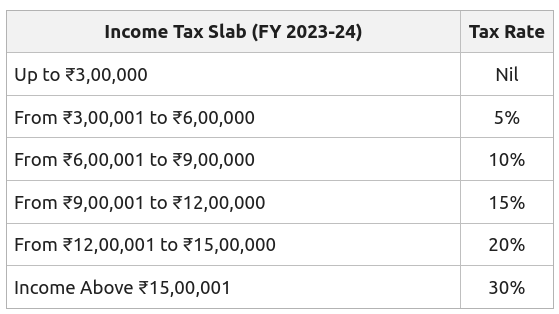
• Rates of Income Taxes under New Tax Regime - Individual
New Tax Regime to be applied on default basis, however assesses to have option to opt for taxation under Old Tax Regime.

Revised applicable slab under New Regime is tabulated below:


Following deductions will be available under New Tax Regime:

i. Standard Deduction increased to INR 52500 u/s 16(ia) of the IT Act.
ii. Deduction u/s 57(iia) of the IT Act from Family Pension Income up to INR 15000; and
iii. Deduction of amount paid/deposited in the Agniveer Corpus Fund u/s 80CCH (2) of the IT Act.

• Rate of Surcharge - Individual
Maximum rate of surcharge is proposed to be restricted to 25% as against 37%. This results the maximum effective tax rate to 39% from earlier 42.7%. Further, it is proposed that in case where the members of the AOP consists of only companies, the maximum rate of surcharge be restricted to 15%.

• Rebate under Section 87A of IT Act - Individual
Threshold for rebate on the income tax payable under Section 87A of the IT Act increased to INR 7lakhs from INR 5lakhs, applicable for assesse opting taxation under New Tax Regime.

• 1 crore Tax Filers in INR 5-7 lakh slab to benefit from new I-T plan

• World's Highest Personal Income Tax Rates (in %)

Sl. No.                Country                   (%)
   1                     Hongkong                 15
   2                     Singapore                  24
   3                      Canada                     33
   4                     Philippines                35
   5                      Thailand                   35
   6                        USA.                      37
   7                       INDIA                     39
   8                        France                    45
   9                      Germany                  45
  10                     Australia                  45
  11                        China.                   45
  12                         UK                       45
  13                       Japan                      56
  14                      Sweden                   57

• Maximum Deposit Limit enhanced for Senior Citizen Savings Scheme from 15 lakhs to 30 lakhs and for Post Office Monthly Income Scheme from 4.5 lakhs to 9 lakhs (single account) & to 15 lakhs (joint account).

• Mahila Samman Savings Certificate introduced tobe applicable till March 2025 at an interest rate of 7.5%.

• Anti-avoidance measure
i. Section 56(2)(viib) of the IT Act provides for taxation of the amount received by a taxpayer on issue of shares in excess of the fair market value from residents. It is now proposed to bring non-residents under its purview effective from the AY 2024-25.

ii. Further to widen the scope of Section 9 of the IT Act covering deemed gifts from residents to RNOR has now been proposed to curb tax avoidance. Currently, any sum of money exceeding INR 50,000 gifted by a Resident to a Non-Resident is taxed in the hands of the Non-Resident, if not within permissible Relation.

• Deduction with respect to Interest on Housing Loan
To avoid double deduction on interest under section 24 or under other provisions of Chapter-VIA, it has been proposed that the cost of acquisition of the asset or the cost of improvement thereto shall not include the deductions claimed on the amount of interest.

• Restriction on Investment in Residential Property for availing deduction on Capital Gains u/s 54 & 54F
A threshold limit has been introduced on maximum deduction which can be claimed for cost of new asset purchased Under Sections 54 and 54F to INR 10 crores. Corresponding amendments have also been proposed to be made for amounts to be deposited under Capital Gains Account Scheme under both the sections to INR 10 crores.

• Capital gains not to be attracted on conversion of Gold to Electronic Gold Receipt and vice versa
The conversion of Physical Gold to Electronic Gold Receipt and vice versa is proposed not to be treated as a transfer and not to attract any capital gains.

• Taxation on Sum of Insurance amount received on maturity
Income from insurance policies received [other than in case of Death], having a premium above INR 5 lakhs (individually/in aggregate) in a financial year shall be taxable as ‘Income from Other Sources.
Deduction of aggregate premium paid will be allowed if not claimed before. The proposed provision shall apply for policies issued prospectively I.E. On or after 1stapril, 2023. This will, however, not apply to any sum received on the death of a person and also not applicable to unit-linked insurance plans.

• Changes brought in TDS provisions
i.   Rate of TDS on winnings from online games @30% has been proposed. Tax will be on net winnings without any threshold limit. However, for lottery and crossword puzzle games, the threshold limit of INR 10000 for TDS will continue. Games of skill and games of chance have been treated on the same plane.

ii.   Restricting TDS at 20% instead of TDS at MMR on payment of accumulated balance of PF in case of failure by employee to furnish the PAN.

iii.   Threshold limit of 3 crores to be applied for TDS u/s 194N, in case recipient is Cooperative Society.

iv.   Amendments proposed to include cash benefits within the ambit of the benefit or perquisites chargeable to tax under the Section 28(iv) and corresponding amendment in Section 194R of the IT Act.

v.   The business trust deducting TDS at 5% on interest income of NR unit holders to be eligible for certificate for deduction at lower or NIL rate.

vi.   Proposed to omit clause (ix) of the proviso to section 193-exemption from TDS on payment of interest on listed debentures to a resident.

• Introduction of tax authority
In order to reduce burden of CIT (A) and to ensure speedy disposal of cases, a new authority of Joint CIT(A) is proposed to be created. It will have powers, responsibilities and accountability similar to CIT (A).

• Mismatch in TDS Credit
Taxpayers are allowed for making application to the AO within 2 years from the end of subsequent FY in which TDS deducted in case of TDS credit mismatch on account of cash system followed by deductor for TDS deduction.

• DTAA relief for TDS
DTAA relief is proposed to be made available for TDS under Section 196A of the IT Act with respect to certain income of a non – residents relating to units of mutual funds.

• Increase in timelines for completion of assessment or reassessment
Completion of assessment proceedings is proposed to increase from 9 months to 12 months from the end of the assessment year in which the income was first assessable. Further, in the case of an Updated Return the timeline is proposed to increase to 12 months from the end of the FY in which such return is furnished.

• Penalty introduced for false self – certification and failure to deduct tax
Penalty of INR 5,000 for a false self-certification of a statement in respect of specified financial transaction and penalty and prosecution for a person who fails to deduct or pay tax as per Section 194R, 194S and 194BA of the IT Act.

• Increase in TCS rate on LRS remittances
Proposes to increase TCS from 5% to 20% for certain classes of overseas tour packages and other foreign remittances (except for the purpose of education or medical treatment) to be effective from July 1, 2023. The bill proposes a new capital gains provision for market-linked debentures, taxing income from insurance policies where the premium is more than INR 5 lakhs and TDS to be deducted on interest payments on listed debentures.

• Leave Encashment increased to Rs.25 lakhs
The maximum amount which can be exempted has been increased from Rs.3 lakhs to Rs.25 lakhs upon retirement of non-government salaried employees.

• Addendum of West Bengal State Budget 2023
Joy for Home Buyers &Sellers
i. Stamp duty on residential properties in urban areas priced below Rs. 1 crore reduced from 6% to 4%
ii. Stamp duty on residential properties in urban areas priced above Rs. 1 crore reduced from 7% to 5%
iii. Stamp duty on residential properties in rural areas priced below Rs. 1 crore reduced from 5% to 3%
iv. Stamp duty on residential properties in rural areas priced above Rs. 1 crore reduced from 6% to 4%
v. Circle rates cut by 10%
This SOP has been extended upto September 30, 2023

• Finance Bill 2023 passed with 64 Amendments

DEBT FUNDS LOSE LONG-TERM CAPITAL GAINS BENEFIT
i. No LTCG benefit for debt funds with less than 35% in equities
ii. Income from debt funds to be taxed at slab rate of taxpayer
iii. Parity in taxation with bank fixed deposits
iv. Applicable prospectively from FY24
v. No indexation benefit

20% WITHHOLDING TAX ON ROYALTY/TECHNICAL FEE PAYMENTS
i. Withholding tax rates raised to 20% from 10% on payments to Non-Residents
ii. India will be able to levy the tax treaty rate of 15% on US, UK Cos
iii. It was unable to levy this rate as domestic rate was lower at 10%
iv. Non-treaty countries will also face the higher 20% withholding tax

25% HIGHER STT ON F&O
i. Securities Transaction Tax on options sale raised to 0.0625% from 0.05%
ii. STT on futures raised to 0.0125% from 0.01%
iii. May Impact F&O volumes on exchanges

Credit card used for foreign travel will attract TCS @ 20% except education and medical purpose

Tax Relief for marginal income earner over and above Rs. 7, 00,000 in New Tax Regime

TDS on online gaming will now be effective from 1st April, 2023 instead of 1st July, 2023


Disclaimer:- (You are advised to consult your Legal Counsel before taking any decisions. This is issued only for the purpose of public awareness and information. The Contributor or any of his employees/associates will not take any responsibility for any actions of the reader based directly or indirectly on the basis of the above Article.)


Pages: [1] 2